Reducing the Risk of Back Pain from Sitting
As a crane operator, you may experience back pain on the job. Back pain often comes from sitting for long periods and poor posture.
Recognize the Symptoms
Back pain can range from a dull ache to a sensation similar to an electric shock. It usually affects only one side of the body.
Factors that Contribute to Back Pain
- Sitting for long periods can strain your back. This can result in pain and numbness.
- Muscle strain in the lower back can make your back stiff and difficult to move.
- Muscles in your sides, back, hips, abdomen, and buttocks make up your core. If the core muscles are weak, they can’t adequately support your spine. This can result in pain.
How to Reduce the Risk of Back Pain
Warm up. Before each shift, do some exercises (e.g., arm circles, leg lifts, and lunges) to warm up your muscles.
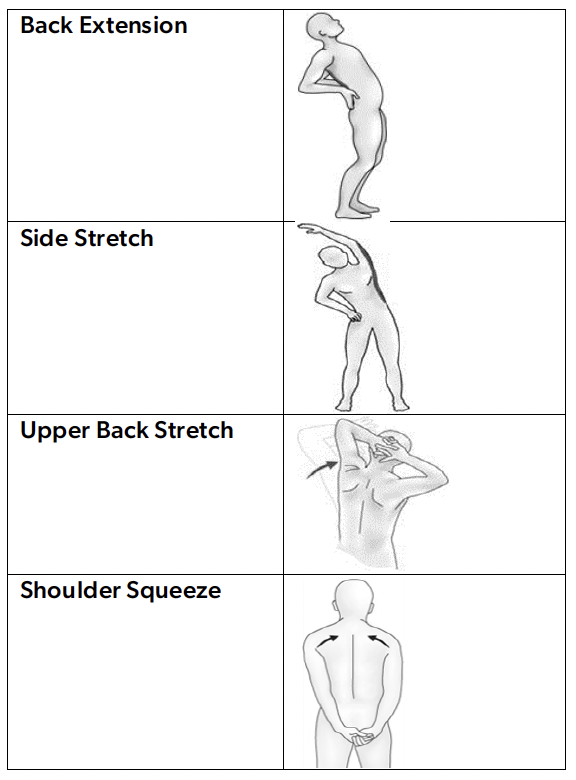
Stretch. Stretching lengthens your muscles and tendons. It can help you relieve pain and build strength. Try the stretches shown in the drawings.
Move your seat so you can easily reach the steering wheel and the controls without needing to stretch your arms.
Adjust the seat so it supports the natural curve of your spine. This helps your posture and lets your back muscles relax.
Take micro breaks. Short (e.g., 5-minute) breaks during your shift give your muscles a chance to rest. Try stretching during these breaks. Contact BC Crane Safety for your in-cab stretching reminder magnet.
References
Occupational Health and Safety Regulation Part 4, Sections 4.46–4.53 Ergonomics (MSI) Requirements