Safety Trends in 2026 for Crane, Hoisting & Rigging
// February 27, 2026
Trenton Grover’s Crane & Hoist Canada Safety Corner: Competence First, Innovation Second article dives into the current and upcoming challenges, innovations, and solutions to enhancing and maintaining safety in the workplace for crane operations, hoisting, and rigging.
Rapid change is taking place in the industry, but one principle remains constant: competence saves lives.
Recent technologies and sustainability initiatives are reshaping worksites, but the core of lifting safety still depends on qualified, trained, and certified people.
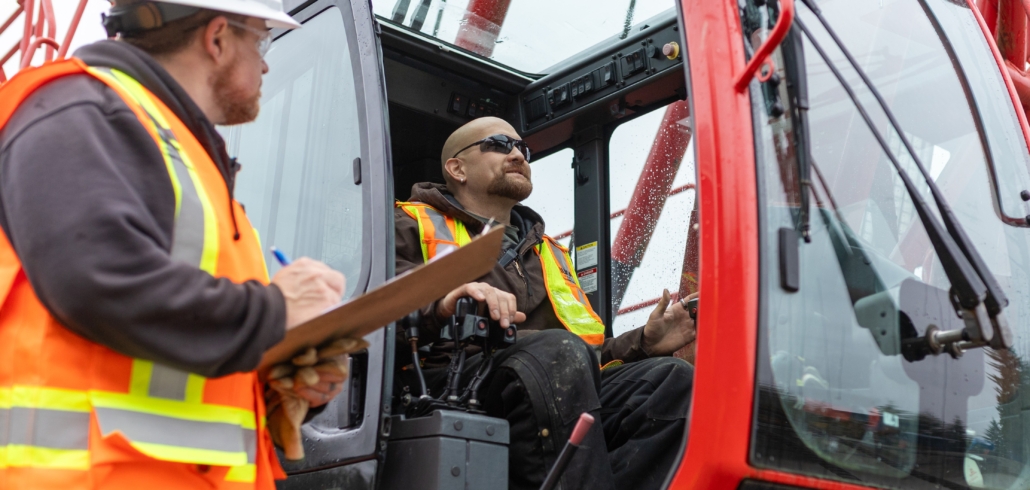
Workers must be competent and qualified, and for crane operators, certified.
Competency means more than passing an exam. It includes continuous learning, strong supervision, and adapting to evolving standards.
WorkSafeBC Occupational Health and Safety Regulation (OHSR) reinforces this expectation. These requirements aren’t just legal obligations; they are the baseline for safe work.
-
OHSR Part 14, Section 14.34.1 Operator CertificationCranes must be operated by certified operators.
-
OHSR Part 15, Section 15.2 Qualified RiggersRigging and slinging must be done by qualified workers.
As cranes grow more sophisticated and project timelines tighten, companies must reinforce competence with ongoing training, supervision, and skill verification.
Technology is a support tool, not a substitute. Advancements in technology are reshaping lifting operations, but they are not replacements for skilled workers.
Artificial intelligence (AI), smart sensors, and connected equipment can enhance decision making. Some technology upgrades provide enhanced environmental data and improved risk assessment or risk mitigation, while others provide improved training outcomes by offering realistic, consequence-free environments to practice critical skills.
But the core remains unchanged. Technology enhances competence but does not create it.
Sustainability continues to influence equipment innovation and choices. Improvements to cranes may reduce emissions, noise, and fuel costs, advancing both environmental and operational goals.
Similarly, generational workforce challenges are driving operational changes. Regulations, equipment, and best practices are evolving, and training must evolve with them.
Ensuring competence in this changing landscape is not the job of one person or one role. It is a shared responsibility requiring coordinated effort across the entire project team.
In 2026, lifting safety is about balance, which means competence first and technology second.
The safest jobsite is one where people are trained, qualified, competent, and supported by innovation that makes every lift smarter and safer.
You can read the full article online in the Crane & Hoist Canada January / February 2026 Magazine’s Safety Corner.