Rigging
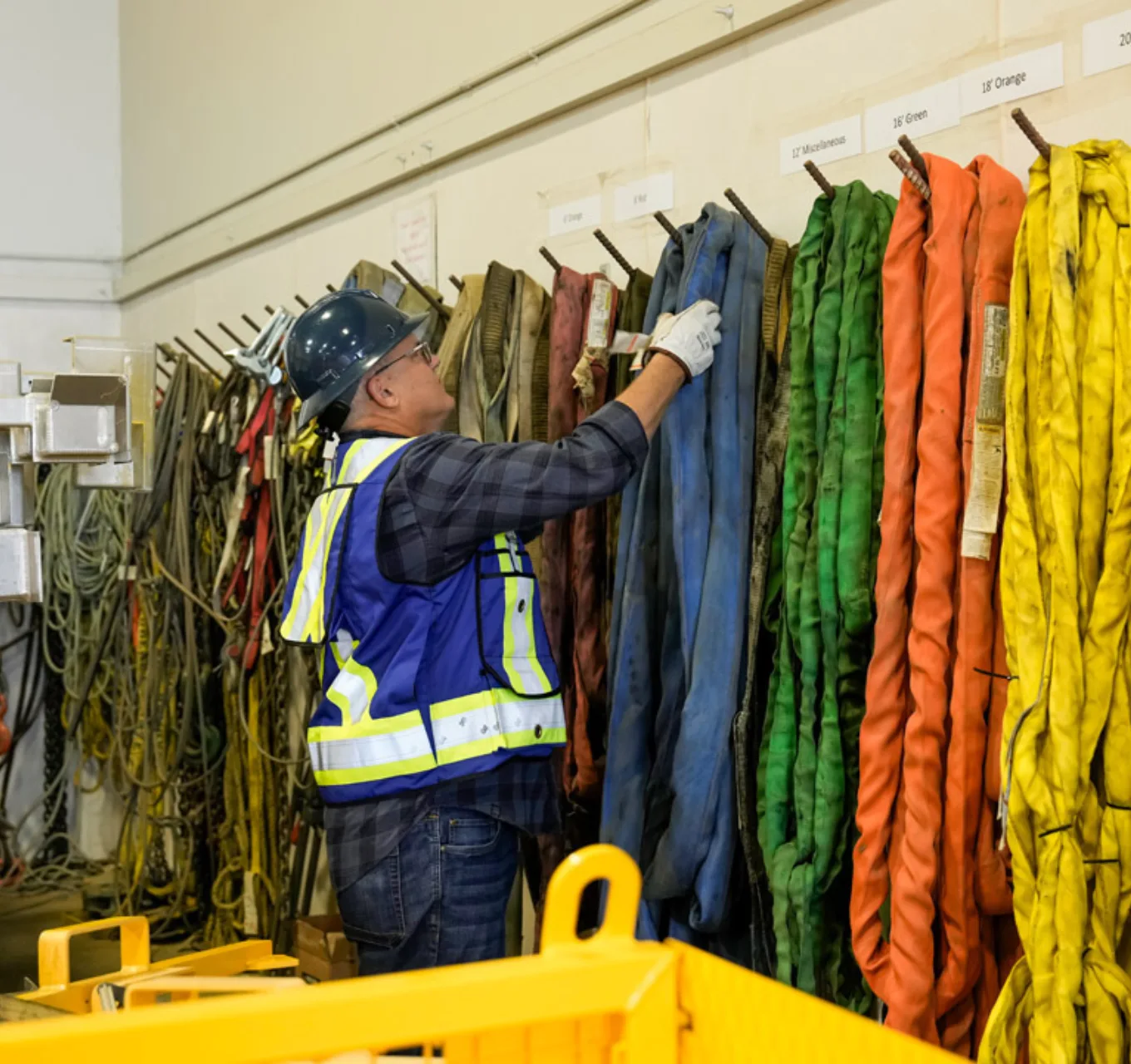
What Is Rigging?
Rigging operations refers to the selection, inspection, configuration, and attachment of slings, hardware, and related components so a load can be safely lifted and controlled by a crane or hoist. Rigging activities must follow manufacturer instructions, applicable standards, and site‑specific procedures or lift plans.
WorkSafeBC defines “rigging” as fibre ropes, wire ropes, chains, slings, attachments, connecting fittings, and associated components.
A fundamental principle of crane safety is that a load is only as safe as the rigging system supporting it.
Safe rigging is essential to ensuring loads are lifted, moved, and controlled safely. Rigging failures are a leading contributing factor in crane incidents and can result in dropped loads, serious injuries, and equipment damage.
Effective rigging depends on proper planning, competent workers, suitable equipment, and clear communication throughout the lift.
Following these practices prevents dropped loads, serious injuries, fatalities, and equipment and/or property damage, and keeps you compliant with WorkSafeBC regulations.
Roles in Rigging
Safe rigging depends on clearly defined responsibilities and authority.
It is important to note that any worker involved in a lift has stop‑work authority and must stop the operation if unsafe conditions are identified.
Riggers are responsible for selecting appropriate slings and hardware, inspecting rigging equipment before use, assisting to determine load weight and centre of gravity, configuring the rigging correctly, and stopping work if unsafe conditions are identified.
Signal persons are responsible for providing clear, standardized signals, maintaining continuous communication with the crane operator, and monitoring the load path and surrounding hazards during the lift. This could be a rigger acting as the signal person for a particular lift.
Tagline operators control the rotation and orientation of loads and to help workers maintain distance from hazards. Riggers typically will assume or be assigned the role of a tagline operator during a lift as required.
Crane operators are responsible for understanding the lift plan and rigging configuration, responding only to authorized signals, and stopping the lift if visibility, communication, or safety is compromised. Ultimately every lift is the responsibility of the crane operator.
Employers are responsible for ensuring rigging is performed by trained and competent workers, that appropriate rigging equipment is provided and maintained, and that lift planning, supervision, and communication processes are in place.
Employers must also ensure regulatory requirements are met and that required documentation is maintained.
Rigger Training, Competency, and Documentation
Rigging must be performed by qualified workers. Regulation in B.C. defines a “qualified” worker as being “knowledgeable of the work, the hazards involved and the means to control the hazards, by reason of education, training, experience or a combination thereof”.
This means that riggers must be trained, competent, and familiar with the specific equipment and loads involved.
Riggers must also be familiar with the original equipment manufacturer (OEM) instructions and the limitations and inspection/rejection criteria for the equipment they use.
They are required to calculate load weights, sling angles, and associated tensions, as well as sling and hardware capacities.
Additionally, riggers must be knowledgeable in communicating with the crane operator and other workers on the jobsite.
Employers should maintain documented training and competency records for rigging personnel. Many rigging training programs are available, covering a range of training levels from fundamentals to advanced operations.
It is recommended that any worker who is expected to be hands-on in the field should receive rigging training that contains a practical component with an assessment.
Core Elements of Safe Rigging
Effective rigging begins with planning and hazard identification and continues through load handling, communication, and verification. The core elements of rigging include determining accurate load weight and centre of gravity, selecting appropriate slings and hardware, configuring hitches and sling angles correctly, calculating sling tensions where required, inspecting and protecting rigging equipment, assessing environmental and electrical hazards, conducting pre‑lift meetings, and maintaining clear communication throughout the lift.
Riggers must always follow:
- Manufacturer instructions for the rigging equipment being used
- WorkSafeBC Occupational Health and Safety Regulation
- Applicable ASME B30 Safety Standard: Cranes and Related Equipment
- Applicable CSA Z150 Safety Code on Mobile Cranes and CSA Z248 Code for Tower Cranes
- Site‑specific procedures and lift plans
Planning the Lift for Rigging
Rigging should follow a logical sequence from the arrival of the load through to lift completion. Planning is a critical activity to ensure the smooth execution of a lift while maintaining worker safety and protecting property and equipment.
All lifts must be planned, but not all lift plans must be written down. However, organizational policies must also be respected, and some employers may require a written plan.
A lift planning template and related Toolbox Talk is available to help you build your plan:
Remember, “plan the lift and lift to the plan.”
1. Load Arrival and Hazard Identification
Before rigging begins, workers must understand the load, the intended lift, and site conditions. This includes identifying hazards such as overhead power lines, nearby structures, ground conditions, weather, and crane limitations. Roles, communication methods, supervision, and the need for a documented lift plan should be confirmed during pre‑lift meetings or toolbox talks.
At this stage, the crane operator and rigger are asking, “Do we need a written lift plan for this lift?”
In British Columbia, regulation does not require a written lift plan for every crane lift. However, it does require that all lifts be planned and carried out safely, and that additional controls be used where risk increases.
A written lift plan is required when the lift meets the definition of a critical lift or when the complexity or risk of the lift means that verbal planning alone is not sufficient to ensure safety.
The OHSR defines several situations that make a lift critical, including lifts near capacity, tandem lifts with more than two powered lifting devices, lifts involving personnel, lifts where the centre of gravity or sling lengths change during the lift, lifts over or near energized conductors, and other high‑risk scenarios.
When deciding whether a lift plan should be written, workers and supervisors should consider factors such as:
- Whether the lift meets the definition of a tandem or critical lift.
- OHSR Part 14, Section 14.42 Tandem Lift
- OHSR Part 14, Section 14.42.1 Critical Lift
- The load weight relative to crane capacity and configuration.
- The complexity of rigging or load geometry.
- The proximity to power lines, structures, or occupied work areas.
- Visibility and communication challenges.
- Conditions such as unfamiliar or congested work environments.
- The involvement of new or provisional workers.
If any of these factors are present, documenting the lift plan helps ensure hazards are identified, controls are communicated, and everyone involved understands how the lift will be performed.
Even for routine lifts, employers may choose to require written lift plans as a best practice to support consistency and due diligence.
Lift plans must be completed by competent persons. This could be the rigger, crane operator, supervisor or may require assistance from an engineer. All of this depends on the complexity of the lift and plan.
2. Electrical Safety and Limits of Approach
Should a crane come into contact with live electrical conductors, the rigger is more likely to be injured fatally.
Riggers need to know the voltage-dependent safe limit of approach (LOA) and implement required controls such as spotters, barricades, or power isolation to comply with relevant regulations when working around electrical conductors.
When planning for a lift, considerations should be made regarding electrical safety. Site conditions, weather, flight paths, load size, or other equipment traffic can all affect the lifting team’s ability to maintain a safe LOA.
If there is a risk during the operations that the minimum approach distance cannot be maintained, an Assurance of Compliance with Occupational Health and Safety Regulation, Part 19 (Form 30M33) should be requested from the relevant power line owner to de-energize the relevant power lines and equipment during the lift.
More information on electrical safety and the limits of approach can be found in our Safe Work Practices:
3. Determining Load Weight and Centre of Gravity
The load’s weight and centre of gravity (COG) must be known before selecting rigging.
Load weight is important to ensure crane and rigging capacities are not exceeded.
Additionally, the ground or platform supporting capacity needs to be considered to ensure that the load is well supported.
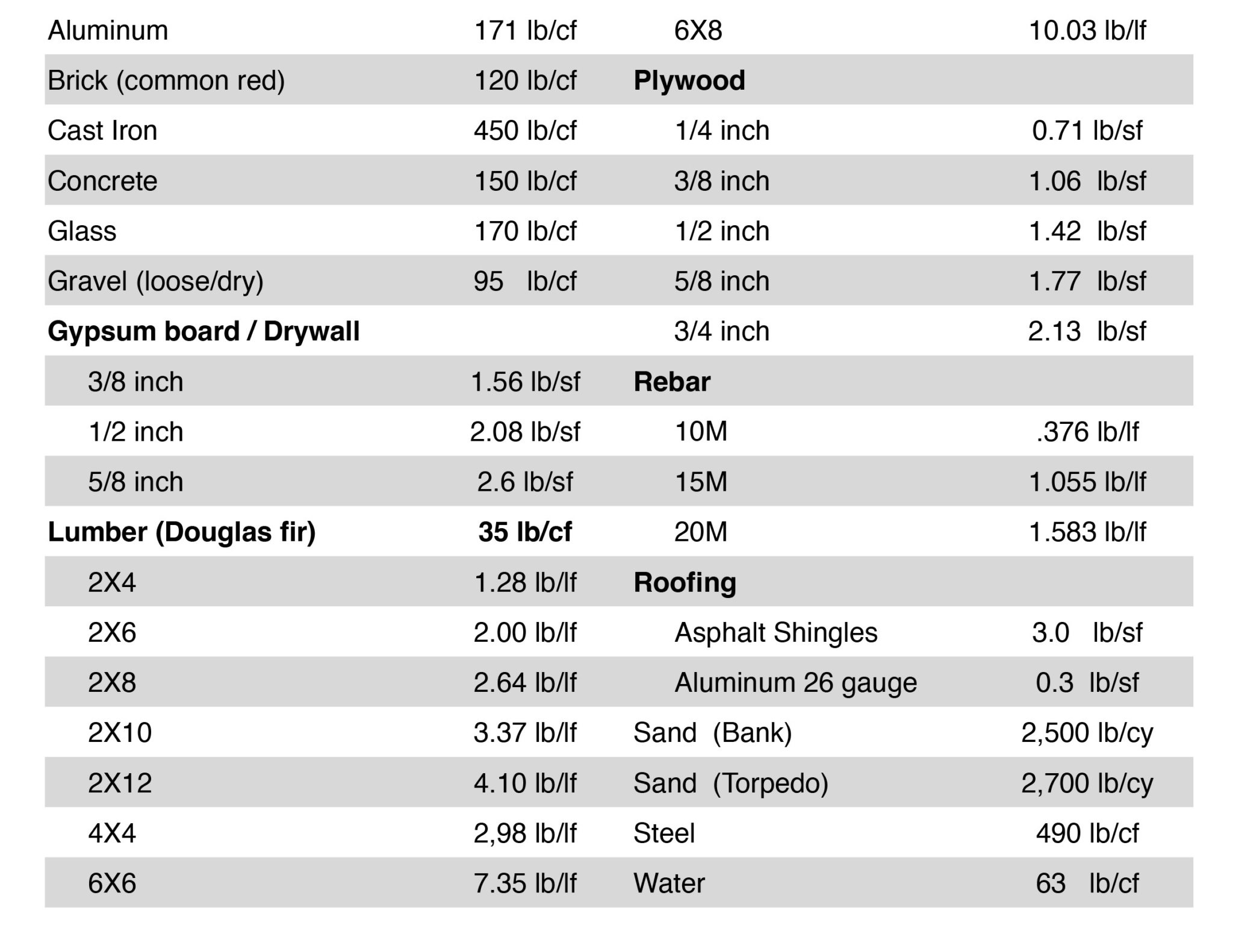
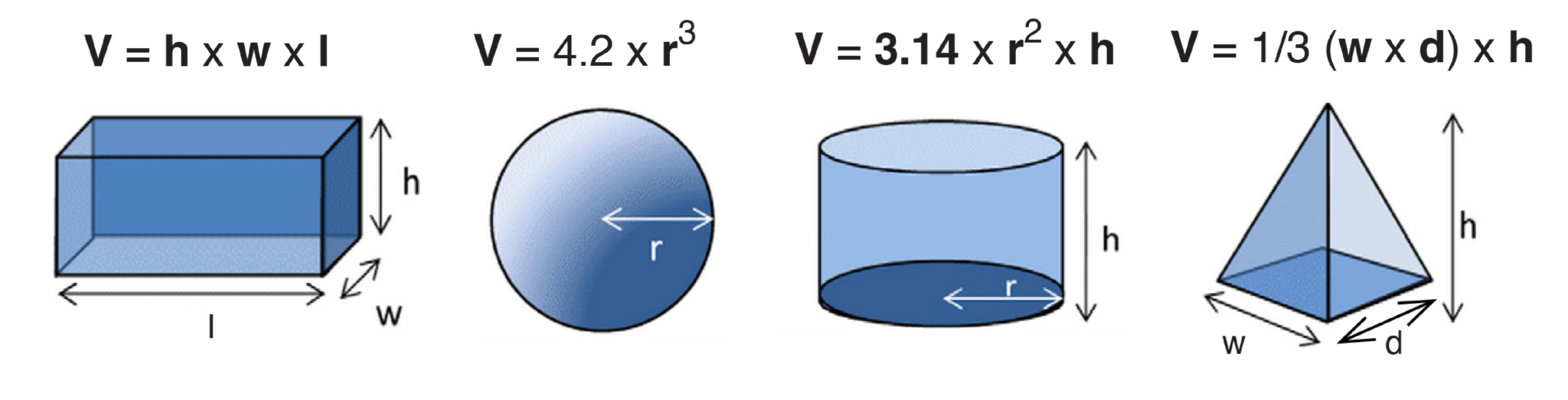
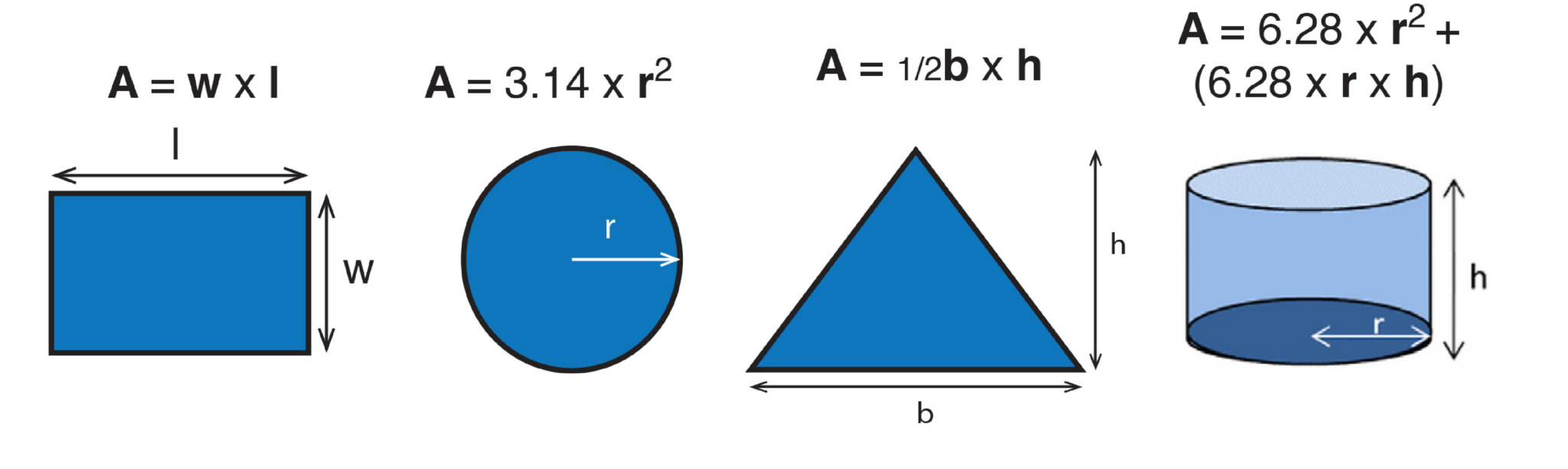
Load weight may be determined using manufacturer information, engineering drawings, shipping documentation, material density calculations, or verified crane or scale readings.
OHSR Section 14.36 Load Weight
Weights of Common Materials
Volume Formulas
Area Formulas
A load’s centre of gravity needs to be determined correctly; otherwise, the loads could be unstable during the lift, and this increases risk and could potentially cause incidents that could harm workers and damage property or equipment.
The load’s COG will always move directly below the hook when lifted. The rigger must identify the load’s COG and rig it accordingly. The COG may be determined by engineers’ drawings, it may be marked on the load, the load may have predetermined lifting points, or the rigger may have to calculate and test lift.
Uneven or offset loads may require unequal sling lengths, adjustable rigging, or test lifts to verify balance before proceeding.
4. Selecting the Hitch and Rigging Configuration
The hitch type and rigging configuration directly affect working load limit (WLL) and load control.
Working Load Limit Example: Chain Slings
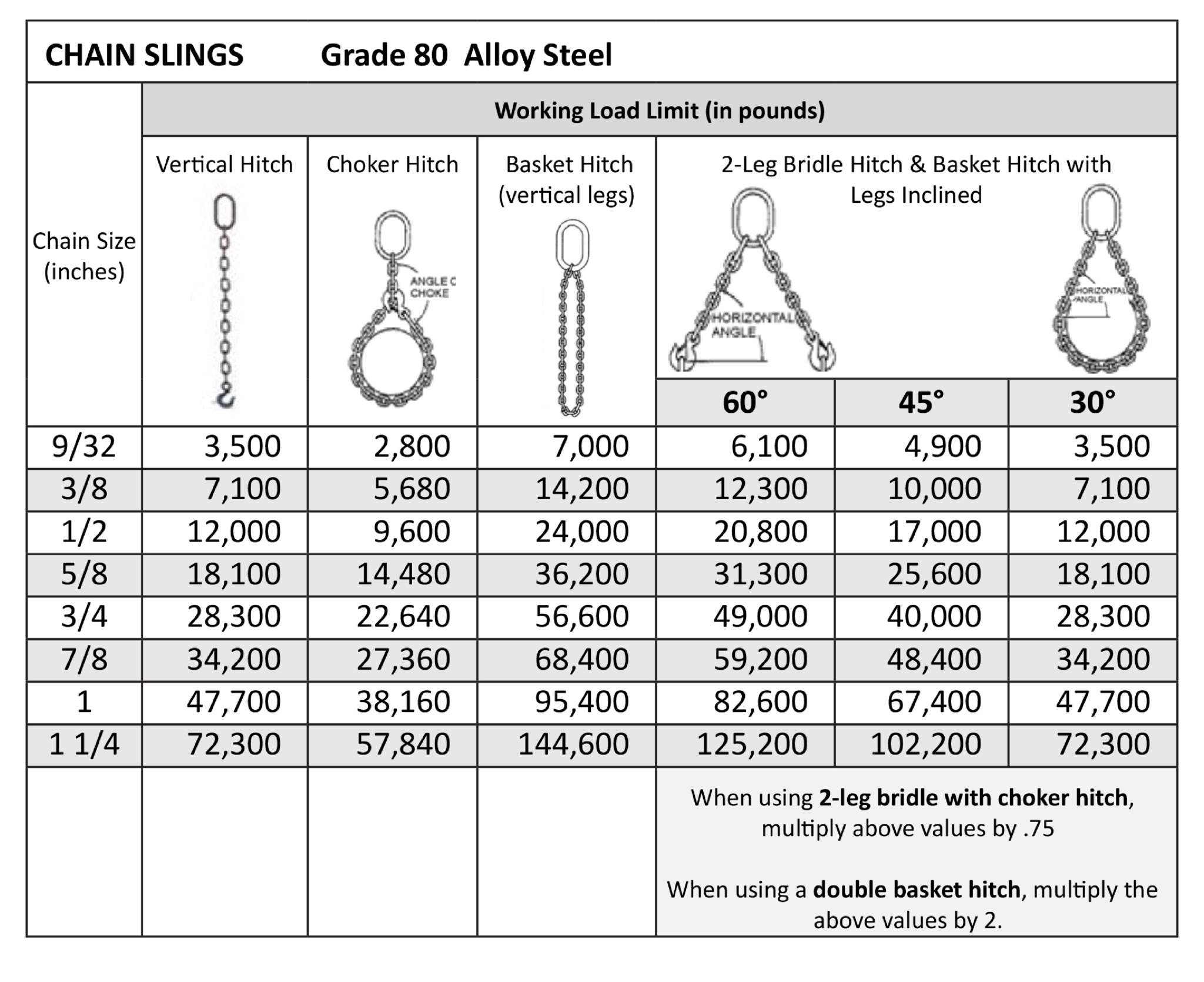
Different hitch configurations affect capacity:
- Vertical hitches use the full rated sling capacity.
- Choker hitches reduce capacity due to the choke angle and contact pressure.
- Basket hitches can increase capacity, depending on sling angle and configuration.
- Multi‑leg bridles require sling tension calculations and proper load equalization.
Specific rigging configurations may be required as outlined in the OHSR. For example, when lifting a load of 2 or more pieces that are longer than 3 m (10 ft), the load must be slung with a 2-legged sling arrangement while keeping the load level. Each sling must also be double wrapped and choked around the load.
OHSR Part 15, Section 15.40 Slinging Loads
Design Factors
A design factor is the ratio between the breaking strength of a rigging component and its rated working load, providing a built‑in margin of safety during lifting operations. This margin of safety protects the rigging in the event of a shock load or some other unforeseen event.
WorkSafeBC regulation establishes minimum design factors for different types of rigging, typically 4:1 for alloy chain components and 5:1 for most slings and wire ropes, ensuring that equipment can withstand loads well beyond its rated capacity.
Any rigging used to support workers requires a higher minimum design factor of 10:1 to account for the increased risk.
While these factors may be reduced for engineered, task-specific rigging assemblies, they must be restored to standard ratings for general use.
OHSR Section 15.6 Design Factors with Table 15-1: Minimum Design Factors for Rigging
Sling Angles and Tension
When slings are used at angles from the vertical, sling leg tension and compressive forces on the load increase significantly as angles decrease.
Therefore, the working load limit must be reduced in accordance with regulatory requirements or manufacturer/engineered calculations to ensure design factors are maintained and tension is verified using approved calculation methods or charts.
OHSR Section 15.34 Sling Angles with Table 15-3: WLL Reductions for Slings at an Angle
5. Selecting and Inspecting Rigging Equipment
Rigging equipment must be suitable for the load, lift conditions, and environment.
For example, in high-temperature or harsh chemical environments, synthetic slings may not be appropriate for use. Fragile loads may require rigging other than chains or wire rope to protect the load from damage.
Slings, wire rope, hooks, shackles, and other hardware must be inspected before use and removed from service if damage, deformation, excessive wear, missing identification, or other rejection criteria are found.
Rigging gear must be inspected:
- Before each use.
- Daily by users.
- Periodically by a qualified person.
- After shock loading or unusual events.
Equipment must be removed from service if damage, deformation, excessive wear, missing identification, or other rejection criteria are found.
Always follow manufacturer manuals as they remain the primary authority for sling ratings, inspection criteria, and use limitations.
For inspection and rejection criteria, follow manufacturer instructions, OHSR requirements, and ASME B30 standards.
OHSR Section 15.31 Inspection Before Use
6. Protecting the Load and Rigging
Where sharp edges, abrasive surfaces, heat, or other hazards could damage rigging, appropriate protection must be used. Protection should prevent damage without reducing rigging capacity or interfering with load control and must remain effective throughout the lift.
OHSR Section 15.39 Sharp Edges
Executing the Lift
Once a lift plan is complete and everyone involved understands how the lift will be performed, the lift can proceed.
1. Test Lift and Final Checks
A controlled test lift may be required to confirm balance, stability, and correct rigging placement. Communication and signals should be reconfirmed before proceeding. If the load does not behave as expected, the lift must stop and the rigging reassessed.
2. Signalling and Communication During the Lift
Signal persons must be trained, qualified, and must use the standard signals authorized under WorkSafeBC OHSR. Information on regulated hand signals can be found in our Toolbox Talk: Hand Signals for Crane Operations
Signal persons must also be able to use other effective means such as radio, whistle, or horn where required.
The signal person must be knowledgeable of crane blind spots, swing radius, and the intended load path to effectively support the completion of the lift.
Continuous communication between the signal person and the crane operator allows for safe lifting. It is important that the signal person must be positioned during a lift to maintain clear and continuous communication with the crane operator.
In some cases, such as a blind lift where the crane operator does not have a clear and unobstructed view of the crane and the load, the signal person must be positioned so that they can see what the operator can’t see to allow the completion of the lift.
Signal persons must comply with applicable regulations and standards including:
- OHSR Sections 14.47–14.49.1 & 15.20 Hand Signals
- CSA Z150 and CSA Z248 signal conventions
- Applicable ASME B30 requirements
3. Taglines and Load Control
Taglines should be used when necessary to control rotation and orientation of loads and to help workers maintain distance from hazards. Taglines must not be used where they could be pulled into energized conductors, become caught on obstructions, or create a greater hazard.
Riggers typically will assume or be assigned the role of a tagline operator during a lift as required.
Essential duties of a tagline operator include having the landing site prepared prior to starting the lift, flight path clear of obstacles, and a safe zone marked out with non-essential personnel excluded.
4. Landing and Securing the Load
When landing a crane load, it must be placed in a stable, supported position before any rigging is released, ensuring the load is fully at rest and cannot shift or roll.
In accordance with OHSR Section 14.50 Unhooking Loads, rigging must not be detached until the load is landed and supported.
Also, a check should be made to confirm that all rigging that needs to be removed can be removed by ensuring that the load has not landed on top of the slings.
Workers must keep clear of pinch points and avoid placing hands or body parts under a suspended or partially supported load.
The best practice is to ensure no tension remains on the lifting components. Once the load is confirmed stable, it should be secured as required (e.g., blocking, chocking, or tied down) before unhooking is completed.
- OHSR Section 14.50 Unhooking Loads
- OHSR Section 15.3 Detaching Loads
Related Regulations and Standards
- OEM manufacturer manuals and instructions for the specific equipment
- OHSR Part 3, Sections 3.23–3.25
- OHSR Part 4, Section 4.3 Safe Machinery and Equipment
- OHSR Part 14, Section 14.13(4)
- OHSR Part 15, Section 15.2 Qualified Riggers
- OHSR Section 15.5 Component Identification
- OHSR Section 15.10 Open Hook Restriction
- ASME B30 Safety Standard: Cranes and Related Equipment
- CSA Z150 Safety Code on Mobile Cranes
- CSA Z248 Code for Tower Cranes