Supervision
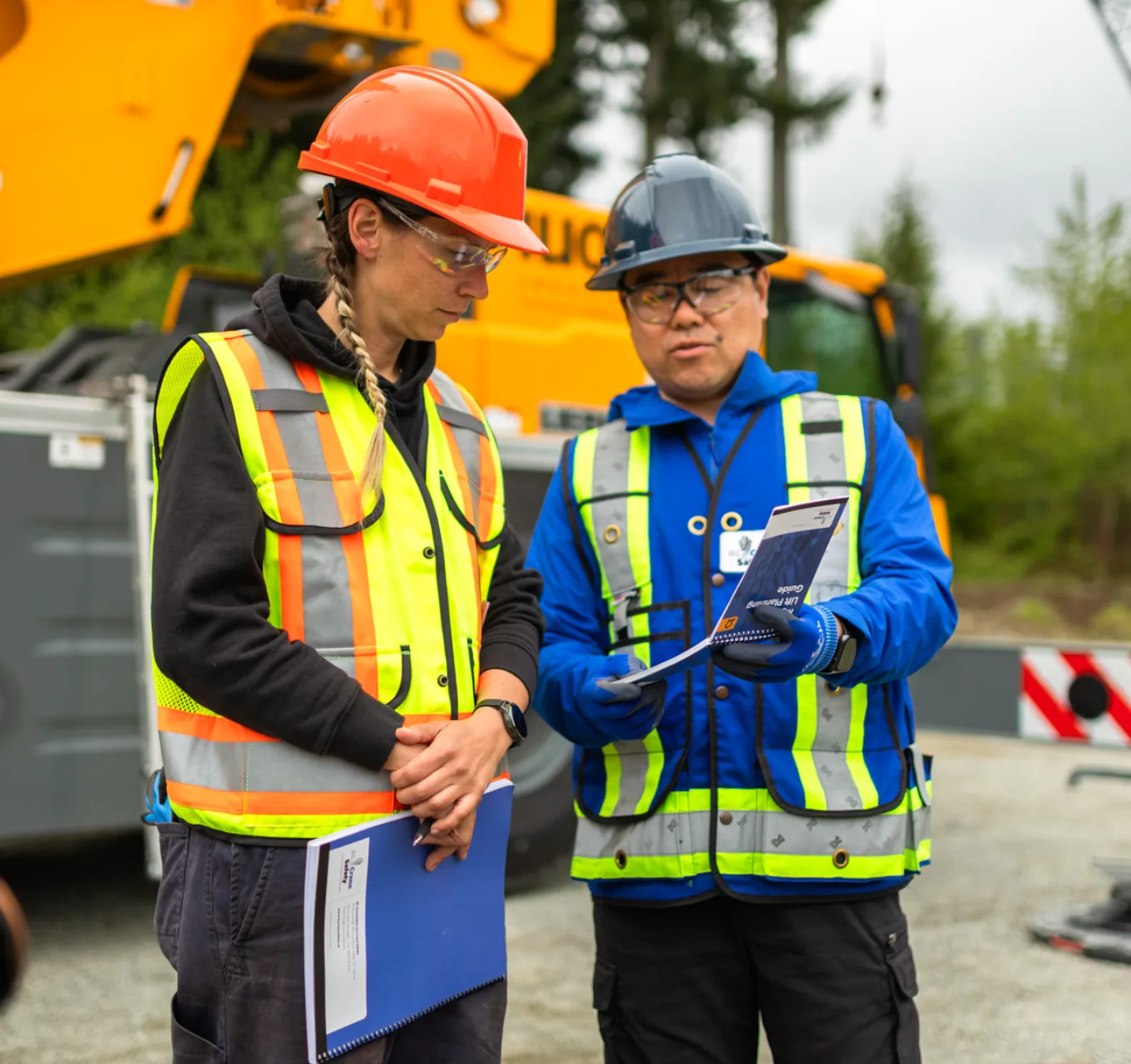
Supervision plays a vital role in creating safe and productive workplaces and supervisors are often the link between an employer's safety program and the workers carrying out the work. Their leadership, communication, and decision-making directly influence workplace safety, compliance, and performance.
In crane and hoisting operations, supervisors help ensure workers understand hazards, follow safe work procedures, use equipment properly, and have the support they need to work safely.
Whether you are a site supervisor, foreperson, superintendent, lift director, lead hand, trainer, or manager, the resources on this page are designed to help you understand your responsibilities and support the workers under your supervision.
Safety Starts with Leadership
Supervisors have a unique opportunity to influence workplace safety every day. By understanding responsibilities, applying the principles of due diligence, and actively supporting workers, supervisors help create safer jobsites and stronger safety cultures throughout British Columbia's crane industry.
Use these resources to build your knowledge, strengthen due diligence, and promote a positive safety culture on every worksite.
What is Supervision?
For crane operations, supervision is the active oversight of crane-related work to help ensure that the work is planned, assigned, communicated, performed, monitored, and documented in a way that protects workers and the public.
In addition to the instruction and direction of workers in the performance of their duties, supervision may include:
- Confirming operator qualifications and scope of work.
- Ensuring operators understand site-specific hazards.
- Supporting safe lift planning and communication.
- Monitoring changing conditions.
- Monitoring pre-use inspections, logbooks, and defect reporting.
- Ensuring provisional operators receive appropriate direct or indirect supervision.
- Supporting emergency planning and rescue procedures.
- Reinforcing safe work practices, toolbox talks, and continuous improvement.
- Ensuring corrective action is taken when unsafe conditions arise.
These supervision activities are performed by a supervisor. Supervision should be provided by a person who is knowledgeable in the work being performed and capable of identifying and correcting unsafe conditions.
For crane work, this usually means the supervisor understands the crane activity, the equipment, the site conditions, the applicable WorkSafeBC requirements, and the limits of the operator’s certification and experience.
In particular, supervision must be given to provisional crane operators. In B.C., provisional crane operators must work under supervision for their entire training period until they achieve Full Scope certification. This requirement exists because the provisional operator designation is similar to a driver’s learner’s licence, where the crane operator is still developing the experience and judgement needed to work independently.
A person may be a supervisor even if the “supervisor” is not their job title.
While supervisors may have different job titles, they share a responsibility for ensuring that work is completed safely and in accordance with workplace requirements.
Examples of supervisors include:
- Crane supervisors
- Superintendents
- Site supervisors
- Lead hands
- Lift directors
- Crane operator trainers
Why Supervision Matters
Crane operations involve changing site conditions, heavy loads, multiple trades, equipment limitations, communication demands, and potentially high-consequence hazards.
Workers look to supervisors for guidance, direction, and leadership.
Effective supervision helps ensure that crane work is planned, communicated, performed, monitored, and improved while safety leadership is demonstrated through everyday actions, decisions, and conversations.
Benefits of effective supervision include:
- Prevention of incidents and injuries
- Identification and control of workplace hazards
- Improved worker understanding of safe work procedures
- Support for new and young workers
- Improved communication and reporting
- Increased demonstration of due diligence
- A positive safety culture
What Is a Qualified and Competent Crane Supervisor?
In a strong supervision system, practical distinctions between the terms of qualified, competent, and certified should be made. While these terms may overlap, they are not identical.
| Term | Practical Meaning for Crane Supervision |
|---|---|
| Qualified | Has the knowledge, training, and experience to perform the assigned supervisory duties safely. A qualified supervisor should be familiar with the crane type, the work being supervised, the hazards, and the applicable regulations, standards, and manufacturer or engineer requirements. |
| Competent | Is qualified for the work and able to identify existing or predictable hazards, understand the applicable WorkSafeBC requirements, and take or direct prompt corrective action within their authority. |
| Certified | Holds a certificate, or credential issued by an acceptable certification body for the specific scope covered by that credential. Certification does not replace the need for site-specific competency and supervision. |
For example, WorkSafeBC requires a crane or hoist to be operated only by a qualified person who has been instructed to operate the equipment, and requires the person to demonstrate competency, including familiarity with operating instructions and the code of signals, before operating the equipment. For mobile cranes, tower cranes, and boom trucks, additional certification requirements apply.
BC Crane Safety defines a qualified and competent crane supervisor as an individual who has at least 7+ years of working knowledge, skill and experience (recommended). This individual’s skills and role can vary. Qualified and competent crane supervisors may provide direct and indirect supervision.
Managing Health & Safety from the Supervisor's Perspective Infoflip
One of the most valuable resources available to supervisors is the BC Crane Safety guide Managing Health & Safety from the Supervisor's Perspective infoflip.
Infoflips are a printed flip‑card booklets with interactive cascading panels and can be used as quick references in the field.
Please contact BC Crane Safety if you would like to obtain physical copies of this infoflip.
The Managing Safety from the Supervisor’s Perspective infoflip was produced for supervisors and safety professionals as a guide to safety-related issues in their daily work environment.
This practical guide helps supervisors understand:
- Legal responsibilities
- Identifying hazards and assessing risks
- Controlling workplace hazards
- Communicating with workers
- Due diligence
- Young and new worker supervision
- Workplace inspections
- Incident investigations
- Return-to-work processes
While the infoflip is a printed resource, we have made an interactive digital copy so that you preview and explore the content.
It is strongly recommended to view this full-screen on a desktop monitor.
Managing Hazards and Risk Assessment
Crane supervision must include ongoing hazard management including hazard identification and risk assessment. Conditions can change quickly, and supervisors should reassess the work as conditions change.
Supervisors must use a 4-step approach to manage workplace risks.
1. Understand the Risks
Know what could cause harm before work begins.
Evaluate the likelihood and potential consequences of each hazard. Risk assessments should be completed before work starts and updated whenever conditions change.
Ask yourself:
- What hazards are present?
- What could reasonably be expected to go wrong?
- Who may be affected?
Examples of potential risks include:
- Working around power lines
- Ground stability
- Suspended loads and load path obstructions
- Equipment deficiencies
- Unsafe weather conditions
- Stress, fatigue, distraction, or impairment
2. Implement Measures to Control Risk
Take action to eliminate or reduce risk.
Implement measures such as using proper rigging equipment and establishing exclusion zones.
Additional examples include using:
- Safe work procedures
- Engineering controls
- Traffic management plans
- Additional supervision
- Personal protective equipment
- Work stoppages when necessary
Controls should always be reviewed for effectiveness.
3. Communicate
Ensure workers are aware of risks and control measures.
Confirm who is communicating with the crane operator, what hand signals or radio channels are being used, what the emergency stop procedure is, and how work will pause if communication is lost or unclear.
Improve communication by implementing:
- Communication protocols
- Pre-lift meetings
4. Monitor and Update
Safety requires continual attention.
Regularly review and update risk controls to ensure effectiveness, especially as site conditions or project requirements change.
Supervisors should:
- Conduct workplace inspections.
- Observe work practices.
- Correct unsafe behaviours.
- Investigate incidents and near misses.
- Review lessons learned.
- Look for opportunities to improve.
Managing safety as a supervisor means changing the unsafe behaviour of workers through the following:
Take Action
Stop unsafe practices immediately, such as grounding a load rigged improperly. or ensuring pre-use inspections.
Positive Reinforcement
Recognize and reward safe behaviours, such as proper use of personal protective equipment (PPE) or adherence to lift plans.
Observation and Feedback
Conduct regular observations of crane operations and provide constructive feedback to workers.
Safety Performance Evaluations
Regularly assessing the safety performance of crane operators and riggers to identify areas for improvement.
By integrating these principles into a crane-specific safety management system, organizations can ensure safer operations, reduce incidents, and demonstrate a commitment to due diligence and continuous improvement.
Due Diligence
Due diligence means taking every reasonable precaution to protect workers and maintain a safe workplace. Due diligence depends on both action and documentation. Supervisors should not only ensure safe work is being done, but also ensure that key decisions, inspections, instructions, meetings, corrective actions, and evaluations are documented.
BC Crane Safety has developed a simple framework to help supervisors understand and demonstrate due diligence through four essential activities.
The Four Cornerstones of Due Diligence
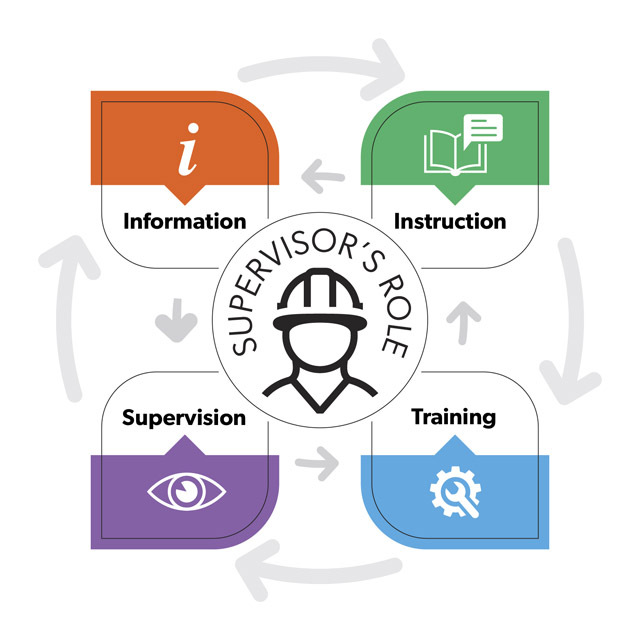
In crane operations, due diligence in safety management can be described as a systematic approach that ensures the provision of information, instruction, training, supervision, verification of competencies, certification, and the identification and correction of physical and worker hazards specific to crane operations.
Information and Instruction
Workers need to know the hazards and safety procedures and clear guidance ensures tasks are done safely.
These two cornerstones ensure crane operators, riggers, signallers, and other crane-related workers receive the appropriate level of education to safely perform their tasks.
Education routinely takes place in classroom-type or employer provided settings, through toolbox or crew talks, one-on-one safety evaluations, written or verbal crane safe work practices, or familiarization with crane original equipment manufacturer (OEM) manuals, load charts, and site-specific safety protocols.
Training
Training builds the skills and awareness needed to work safely and typically takes place on the job. A training system may be based on occupational standards (e.g. BC Crane Safety standards), school or employer training, supervision during training, verification of training through written and practical assessments, and demonstration of competencies, as part of certification and certification renewal.
Supervision
Monitoring helps catch and correct unsafe practices. This cornerstone ensures workers follow safe work procedures and hazards are identified and corrected.
This part of the system ensures:
- Supervising crane operators and riggers during operations.
- Verifying that workers practices, including proper load rigging and communication protocols.
- Correcting unsafe behaviours and conditions.
- Providing clear direction and instruction to workers.
- Responding promptly to work-related questions and concerns.
Proper documentation is critical to demonstrating due diligence, including:
- Recording certifications, competency assessments, and training of crane operators and riggers.
- Documenting hazard assessments, incident reports, and corrective actions.
- Maintaining logs of equipment inspections, maintenance, and load testing.
- Evaluating regularly the effectiveness of safety management systems and making improvements as needed.
Putting the four cornerstones into practice requires proactive attention and action.
Before work starts, consider:
Planning
- Is the work properly planned?
- Are procedures available and understood?
- Are workers competent for assigned tasks?
Hazards
- Have hazards been identified?
- Have risks been assessed?
- Have controls been implemented?
Communication
- Has a pre-job meeting or toolbox talk been completed?
- Does everyone understand their responsibilities?
Equipment
- Has equipment been inspected?
- Have deficiencies been addressed?
- Is required PPE available?
Building a Positive Safety Culture
Strong safety cultures are built through leadership.
Effective supervisors:
- Lead by example
- Treat workers respectfully
- Encourage reporting
- Listen to concerns
- Follow established procedures
- Recognize safe work practices
- Continuously seek improvement
Every conversation, inspection, and decision shapes workplace culture.
Supporting New and Young Workers
New and young workers are often more vulnerable to workplace injuries. Employer support is essential for new and provisional crane operators.
Provisional crane operators face higher risks because of limited experience and unfamiliarity with workplace norms and safety protocols.
This highlights the importance of training, mentorship, regular evaluations, clear communication, and a culture where new operators feel comfortable asking questions and reporting concerns.
Supervisors can reduce risk by:
- Providing orientation
- Explaining workplace hazards
- Confirming competency
- Demonstrating work procedures
- Encouraging questions
- Monitoring work activities closely
Never assume a worker understands a task simply because they have performed similar work elsewhere.
Supervising Provisional Crane Operators
Provisional crane operators are on the pathway to full-scope certification. They must work under supervision during their training period until they achieve full certification.
Important wording clarification: provisional certification is a pathway for operators who hold provisional status; it should not be described as “required for all new crane operators before full-scope certification.” Some operators may receive training and complete the applicable assessment pathway without first holding a provisional certificate, depending on crane type and certification requirements. The key supervision requirement is that any operator working under provisional status must be supervised and must work only within the allowed scope and conditions.
Employers must pay extra attention to provisional operators because they:
- May be less likely to recognize hazards in the working environment.
- May not yet have enough experience to manage unexpected situations.
- May still be learning safety procedures, equipment use, and emergency protocols.
- May hesitate to ask questions or report unsafe conditions.
- May take on tasks even when they are unsure, because they do not want to appear incompetent.
Supervision of provisional operators should be planned, documented, and adjusted as the operator demonstrates competency. The supervisor should confirm the tasks the provisional operator is allowed to perform, the required level of oversight, the evaluation schedule, and when the work must stop or be escalated.
Direct and Indirect Supervision
Supervision of provisional crane operators may be direct or indirect, depending on the operator’s experience, demonstrated competency, the crane activity, and the level of risk.
Direct supervision means the supervisor is close enough to observe the work and provide verbal direction while the provisional operator is performing the work. Direct supervision is especially important during early training, complex work, high-risk activities, and critical lifts.
BC Crane Safety’s Safe Work Practice notes that direct supervision is required for critical lifts performed by provisional operators.
Indirect supervision may be appropriate when a provisional operator has demonstrated competence for routine, non-critical lifts. The supervisor is not necessarily beside the operator at all times, but remains available to provide guidance, monitor progress, and confirm the work is being performed safely.
Employers should clearly define when direct supervision is required, when indirect supervision is acceptable, and how supervisors will remain available to support the provisional operator.
| Direct Supervision | Indirect Supervision |
|---|---|
| The supervisor is physically present at the worksite, within visual and auditory range, ready to provide immediate feedback and guidance. | The supervisor is not physically present but remains available for consultation through periodic check-ins or remote monitoring. |
| Required during initial stages of training. | Only appropriate once the trainee has demonstrated competence. |
| Required for all complex or high-risk operations. | Typically reserved for more routine tasks. |
| Required for all critical lifts performed by provisional operators. | Supervisor must remain accessible and responsive. |
| Supervisor must be able to intervene immediately. | Cannot be used for critical lifts by provisional operators. |
Transitioning Between Supervision Types
As provisional operators gain experience and demonstrate competence, their supervision may transition from direct to indirect supervision for routine tasks. This transition should be based on documented evaluations, not assumptions.
Supervisors should reassess and adjust the level of supervision any time task complexity, site conditions, or operator confidence changes.
More information can be found on the Provisional Crane Operator knowledge base page.
Incident Response and Investigation
When incidents occur, supervisors play a critical role in ensuring appropriate action is taken.
Key responsibilities include:
- Securing the scene
- Assisting injured workers
- Reporting incidents
- Participating in investigations
- Identifying corrective actions
- Sharing lessons learned
The goal of an investigation is not to assign blame, but to understand what happened and prevent recurrence.
Lift Planning and Critical Lifts
Supervisors should understand when a written lift plan is required and ensure it is communicated to all people involved before hoisting begins. WorkSafeBC Occupational Health and Safety Regulation (OHSR) Part 14 requires a written lift plan for every critical lift and every tandem lift.
For critical lifts, the lift plan must be available at the worksite and include rigging details, wind speed limitations, maximum hoist line speed, maximum crane travel speed if applicable, load distribution, and the need for and position of signallers.
Immediately before a critical lift, a pre-job meeting must be held, the lift plan must be communicated to all people involved, and the supervisor must document the meeting. The meeting must be repeated whenever there is a change in the people or equipment involved. Effective communication must be established and maintained between all people involved in a critical lift.
Supervisor focus areas for lift planning include:
- Confirming whether the lift meets the definition of a critical lift or tandem lift.
- Verifying load weight, centre of gravity, crane configuration, capacity, radius, and load path.
- Confirming rigging selection, rigging inspection, signaller positioning, and communication methods.
- Reviewing environmental controls such as wind speed, visibility, lightning, heat, cold, and site access.
- Ensuring critical lifts performed by provisional operators are under direct supervision in accordance with BC Crane Safety guidance.
Communication and Pre-Job Meetings
Clear communication is a core supervision responsibility. Supervisors should confirm who is communicating with the operator, what hand signals or radio channels are being used, what the emergency stop procedure is, and how work will pause if communication is lost or unclear.
Pre-job meetings and toolbox talks should cover:
- The lift plan, load path, roles and responsibilities.
- The designated signal person and backup communication method.
- Hand signals, radio channels, and expectations for clear, closed-loop communication.
- Emergency stop procedures and stop-work authority.
- Site-specific hazards, exclusion zones, public protection, and adjacent work activities.
- Hand-off points where responsibility or communication changes between crews, shifts, signal persons, or work areas.
During the lift, supervisors should ensure only the designated person gives signals to the operator, unless an emergency stop signal is required.
Radios should be functional, charged, and free from interference. Where possible, clear lines of sight should be maintained between the operator, signal person, rigging crew, and load path.
Monitoring and Documentation
Supervisors should not only ensure safe work is being done, but also ensure that key decisions, inspections, instructions, meetings, corrective actions, and evaluations are documented.
Records that can support due diligence include:
- Operator certification and scope verification.
- Written supervision plans for provisional operators.
- Initial equipment orientations and site-specific competency checks.
- Pre-use inspections, equipment logbooks, maintenance records, and defect reports.
- Lift plans, critical lift/tandem lift pre-job meeting records, and communication plans.
- Environmental monitoring records such as wind logs or weather-related decisions.
- Corrective actions, stop-work decisions, near-miss reports, and incident investigations.
- Periodic worker evaluations, retraining records, and certification renewal or targeted evaluation records.
A practical supervisor log or journal can help record daily observations, instructions, follow-up items, and corrective actions. This supports continuous improvement and makes it easier to identify trends before they become incidents.
Notice of Project for Tower Crane (NOP-TC)
Under regulation, every employer responsible for a tower crane activity must ensure that a qualified supervisor is in place. The qualified supervisor is responsible for directing the crane activity and must meet the qualifications and competencies described in OHS Guidelines Part 14, G14.73.1 Tower Cranes - Qualified Supervisor.
Employers must submit a Notice of Project for tower crane erection, climbing, repositioning, and dismantling at least two weeks before the crane activity starts. The NOP-TC must include specific information including the qualifications of the qualified supervisor for the project.
More information can be found on the Tower Crane Site Binder knowledge base page.
Regulatory Requirements
Supervisors must understand and apply requirements under the Workers Compensation Act (WCA) and the Occupational Health and Safety Regulation (OHSR). Relevant regulatory requirements include:
Workers Compensation Act Part 2, Division 4 General Duties of Employers, Workers and Others
OHSR Part 3 Rights and Responsibilities
OHSR Part 4 General Conditions
OHS Guidelines Part 14, G14.73.1 Tower Cranes - Qualified Supervisor