Regular Inspection Requirements for Cranes
Overview
Regular inspections help crane operators, employers, crane owners and others identify hazards and assess risk in the workplace. Inspections are key to preventing injury and avoiding operational delays.
Employers and crane owners must ensure comprehensive, documented inspections of cranes and hoisting equipment are done regularly by crane operators or other competent people because:
- It is required by manufacturer’s directions and the BC Occupational Health and Safety Regulation (OHSR) in sections 3.5-3.8, 4.3, 4.9, 14.13, and 14.14.
- Regular inspections help to verify the crane is in safe operating condition and identify deficiencies that could lead to a lifting incident. Improper maintenance and/or a failure to conduct routine inspections can cause otherwise avoidable incidents.
- Keeping detailed inspection and maintenance records shows that mechanical problems or other issues have been corrected.
What Could Happen Without Regular Inspections?
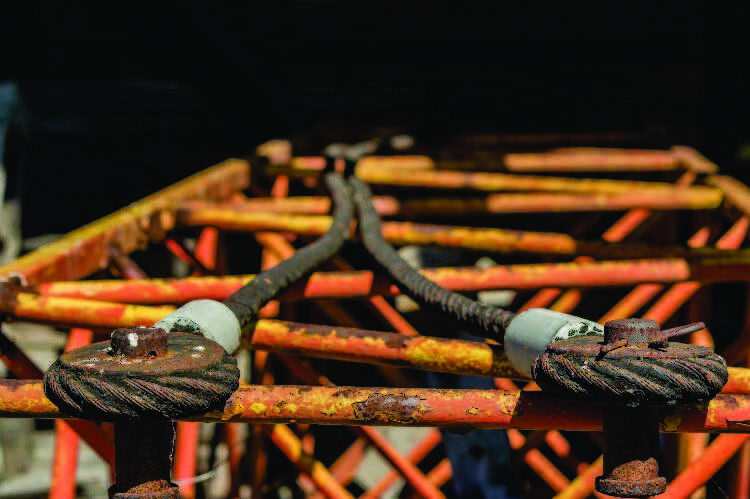
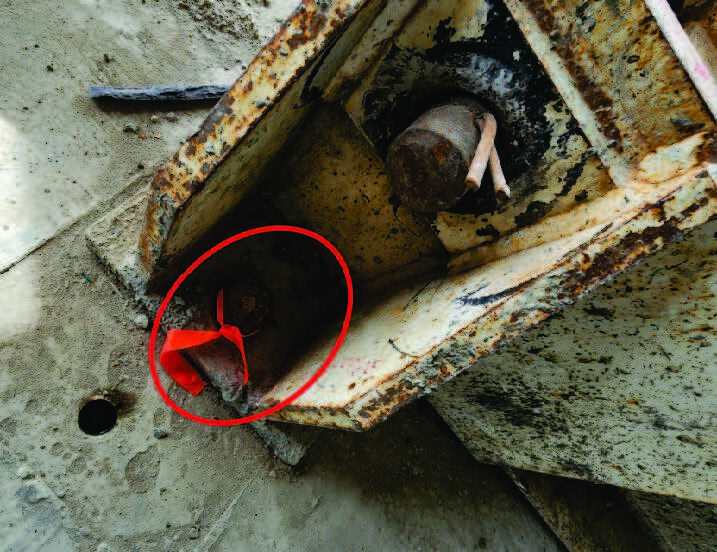
Routine inspections help identify and address issues before they turn into bigger problems. Important crane components wear down over time. Frequent and periodic inspections are required for the proper function of crane systems. The figures on the left show deficiencies that should have been identified and recorded during daily or pre-shift inspections but were overlooked, missed, and/or not corrected.
- Figure 1 shows a rusty and corroded wire rope with a missing keeper pin. Regular inspections would have identified this problem with a recommendation to repair or replace.
- Figure 2 shows a loose bolt on the tie-in slab anchor that could potentially cause the crane base to become unstable.
What Do You Inspect? How Often?
Routine time-based inspections are required by the Occupational Health and Safety Regulation in Sections 3.5 to 3.8 Workplace Inspections, Section 4.3 Safe Machinery and Equipment, and Section 4.9 Inspection and Maintenance Records. Daily to monthly intervals are considered frequent inspections that require some type of functional test or operational test. Inspect the crane as specified by the manufacturer pre-operation, daily, weekly, monthly, annually and periodically. Inspections, tests and maintenance must be carried out by competent, qualified people.
Daily inspections can be pre-shift inspections that typically include visual and audible inspections to ensure cranes are functional and fit for purpose at the time of use. Monthly inspections include critical components such as wire rope. All inspections, tests and maintenance work must be documented in the equipment logbook.
The crane owner and operator are responsible for inspecting and maintaining cranes as per WorkSafeBC OHSR sections 14.13 and 14.14, in accordance with CSA Standards, Z248 Code for Tower Cranes and Z150 Safety Code for mobile Cranes, and in accordance with manufacturers’ specifications, professional engineer’s specifications and by your company’s requirements.
Reminder
Daily to monthly intervals are considered frequent inspections that require some type of functional test or operational test. Inspect the crane as specified by the manufacturer pre-operation, daily, weekly, monthly, annually and periodically. Inspections, tests and maintenance must be carried out by competent, qualified people.
Checklists
Employers and crane operators should use a checklist to ensure consistent and comprehensive inspections. Checklists should be equipment and site-specific and provide a guide to the various standards expected to be in place. A checklist should inform inspectors what to look at and what to look for. The supervisor for the crane and operator should be signing off that they are being conducted as per the manufacturer’s manual or the established inspection list.
Some resources include:
- WorkSafeBC Mobile Crane Inspection Checklist
- BC Crane Safety Inspecting Tower Crane Temporary Devices
- BC Crane Safety Tower/Self-Erect Crane Pre-Assembly/Dismantling Requirements
Crane Logbook and Recording
Record any unsafe conditions observed during inspections and notify your supervisor immediately. Use the crane logbook to document the results of regular inspections of components that can change with day-to-day use and may have a direct bearing on the crane’s safety.
Employers or crane owners must provide a separate logbook for each crane. The logbook always stays with the crane. In a crane rental/lease situation, documentation of inspection findings, repairs, and corrective actions must be filed at the crane’s location, for the length of time it is there. A full history of the crane’s maintenance and repairs must be available for review if not stored at the crane’s installed location.
All inspections, tests, certificates and maintenance work must be recorded in the crane logbook, including, but not limited to:
- Operator certification.
- Annual valid crane inspection.
- Stability test.
- Daily crane pre-use inspection.
- Safety devices inspection.
- Check maintenance, inspection, and repair records.
- Monthly auto lift inspection.
Follow-Up and Monitoring
Deficiencies noted in the inspections should be corrected as soon as possible. There should be a communication plan between those conducting the inspections, the operators, and the maintenance team. There should also be a system in place to follow up on any corrective action that will require time for completion.
Information obtained from inspection records should be reviewed for statistics and analysis to identify any trends developing in the workplace.
References and Resources
OHS Regulation requirements
- Section 3.5 to 3.8 workplace inspections
- Section 4.3 Safe machinery and equipment
- Section 4.9 Inspection and maintenance records
- Section 14.13 Inspection, maintenance and repair
- Section 14.14 Inspection and maintenance records
Standards
- CSA Standard Z248-04 Code for Tower Cranes
- CSA Z150-2020 Safety Code on Mobile Cranes
- CSA B335-15 Safety standard for lift trucks
- ASME B30.5-2021: Mobile and Locomotive Cranes
- ASME B30.10-2014 Hooks
- ASME B30.20-2018 Below-the-Hook Lifting Devices
- ASME B30.23-2016 Personnel lifting Systems
- ASME B30.26-2015 Rigging Hardware
- ASME B30.9-2018 Slings
- ASME B30-22-2016 Articulating Boom Cranes
Information in this document is considered accurate at the time of publication. Please contact BC Crane Safety – Publications Review with any questions or recommendations for content revision. Please refer to WorkSafeBC for current copies of the Workers Compensation Act and Occupational Health and Safety Regulation (OHSR).