WHMIS
Overview
The Workplace Hazardous Materials Information System (WHMIS) provides you with health and safety information about hazardous products at your worksites.
Some hazardous products can cause explosions, fires, or other accidents if they are not handled or stored properly. Other hazardous products can cause health problems (such as eye irritation, lung damage, or cancer) if you are exposed to them.
WHMIS gives you the information you need about the hazardous products you handle, use, or store. As a crane operator or a rigger, you can use this information to help you stay safe and healthy on the job.
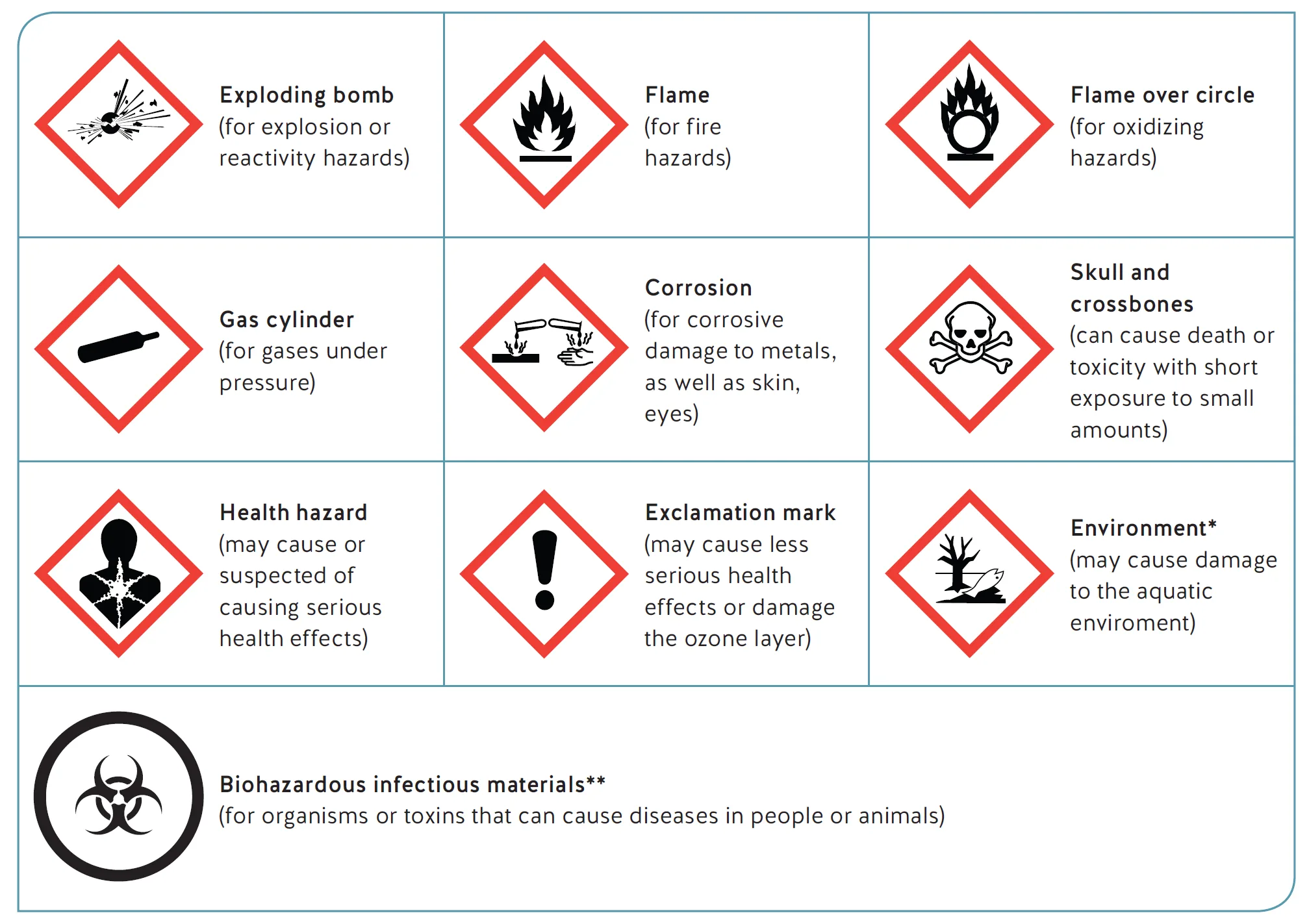
Key Elements of WHMIS
There are four key elements of WHMIS:
- Classification: WHMIS divides hazardous products into two groups: physical hazards and health hazards. These groups are then further divided into hazard classes. A hazardous product can fall into one or more of the hazard classes.
- Labels: Under WHMIS, all hazardous products must be labelled. There are two main types of WHMIS labels: supplier labels and workplace labels. These labels warn you about hazards and tell you how to safely handle each product.
- Safety data sheets (SDSs): SDSs provide you with more detailed information about hazardous products, how to use them, and how to protect yourself. Each SDS has 16 sections. Each hazardous product at your worksite must have an SDS. And your employer must ensure you can access SDSs easily.
- Education and training: You need to be educated and trained in WHMIS so you can work safely with the hazardous products at your worksites.
Responsibilities Under WHMIS
Employers are responsible for ensuring that:
- Workers are educated and trained in WHMIS.
- Hazardous products are labelled properly.
- SDSs are easily available to workers.
- Effective measures are put in place to protect workers.
As a worker, you need to:
- Take part in WHMIS training.
- Take steps to protect yourself and your co-workers.
- Do your part to help identify and control hazards.
References
Occupational Health and Safety Regulation Part 5, Sections 5.3–5.19