Ladder Safety
Ladders are widely used in many workplaces to access elevated work areas. But despite how common they are, ladders are linked to many injuries from falls each year.
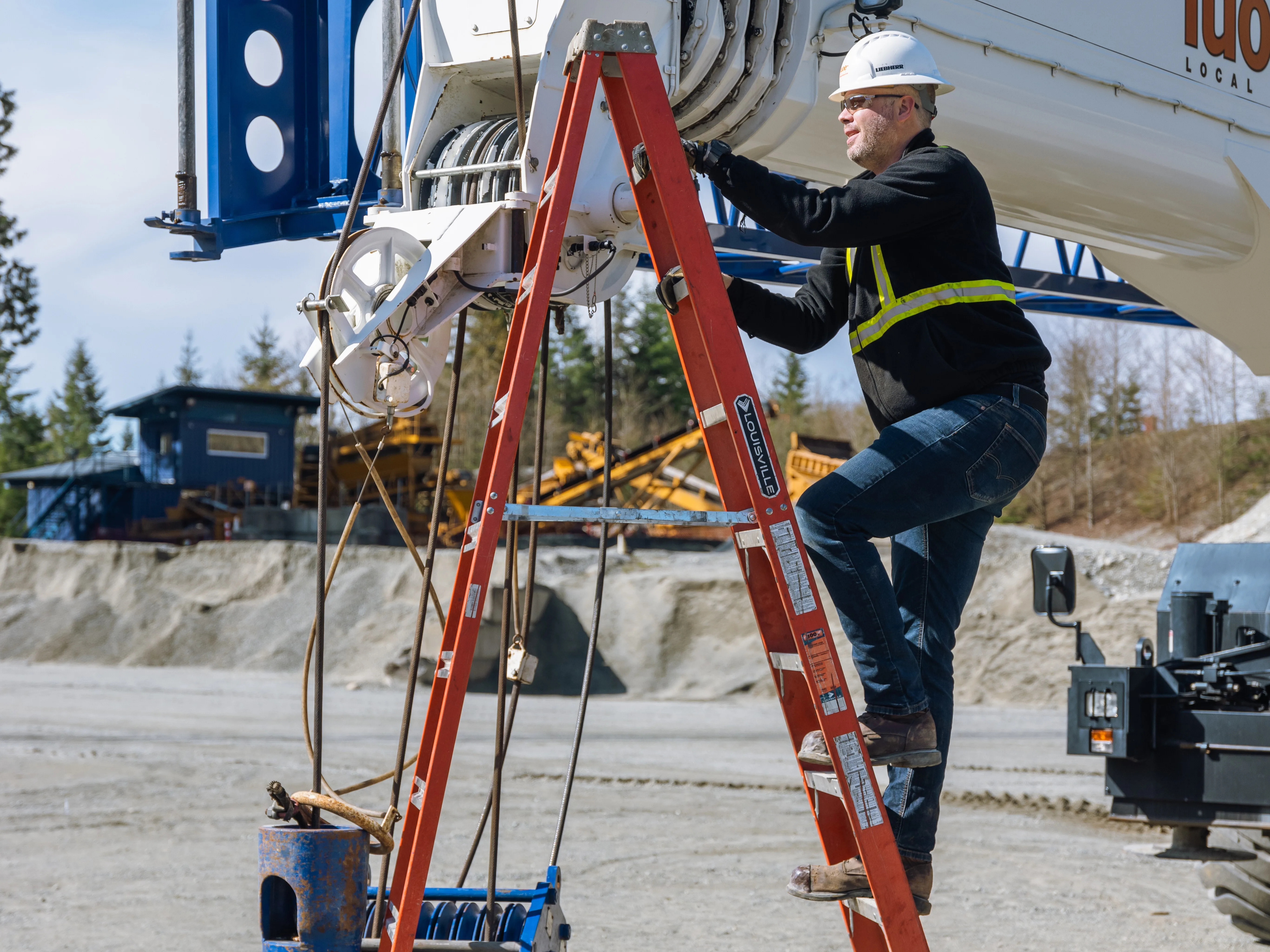
Main Causes of Falls from Ladders
Most falls from ladders happen for one or more of the following reasons:
- The work being done on the ladder was beyond the ladder’s design or capacity.
- The ladder was not set up correctly.
- The worker did not use proper technique when going up or down the ladder.
- The ladder used was not appropriate for the task.
Ladder Design and Build Requirements
In general, commercially manufactured portable ladders used in the workplace must be built to either Canadian Standards Association (CSA) or American National Standards Institute (ANSI) standards. These ladders must be marked with:
- The grade of material used to build the ladder
- The type of use for which the ladder was built
Job-built ladders must be designed, built, and used according to WCB Standard LDR 1.
Education and Training are Essential
Employers must ensure that workers are provided with education and training on ladder safety. This includes the following:
- Assessing whether a ladder is the right tool for the job
- Selecting an appropriate ladder (including ladder grade and type)
- Pre-use inspections
- What to do with damaged ladders
- Safe ladder set-up and use
- Storage and care practices
Using Ladders Safely
Identify and address all hazards in your work area before using a ladder. Some examples of safe ladder use include the following:
- Avoid setting up a ladder on uneven, soft, or wet ground.
- Avoid using a ladder in strong wind, heavy rain, or snow.
- Face the ladder and maintain three-point contact (two hands and one foot, or two feet and one hand) with the ladder when you are on it.
- Avoid overhead electrical hazards.
- For extension ladders, ensure that both locks are engaged, and do not overload the ladder.
- Spread stepladders securely open. Never use a folding stepladder in a folded position.
References
Occupational Health and Safety Regulation Part 13, Sections 13.4–13.6