De-Energization and Lockout
Machinery that has not been de-energized and locked out can start up without warning. This has led to many serious injuries and deaths among workers who do maintenance or repair work on machinery.
“De-energization” means taking steps to remove energy from machinery or equipment. This can be as simple as powering down a machine and then unplugging it. It can also be as complex as using devices (such as chains or pins) to stop machine parts from moving.
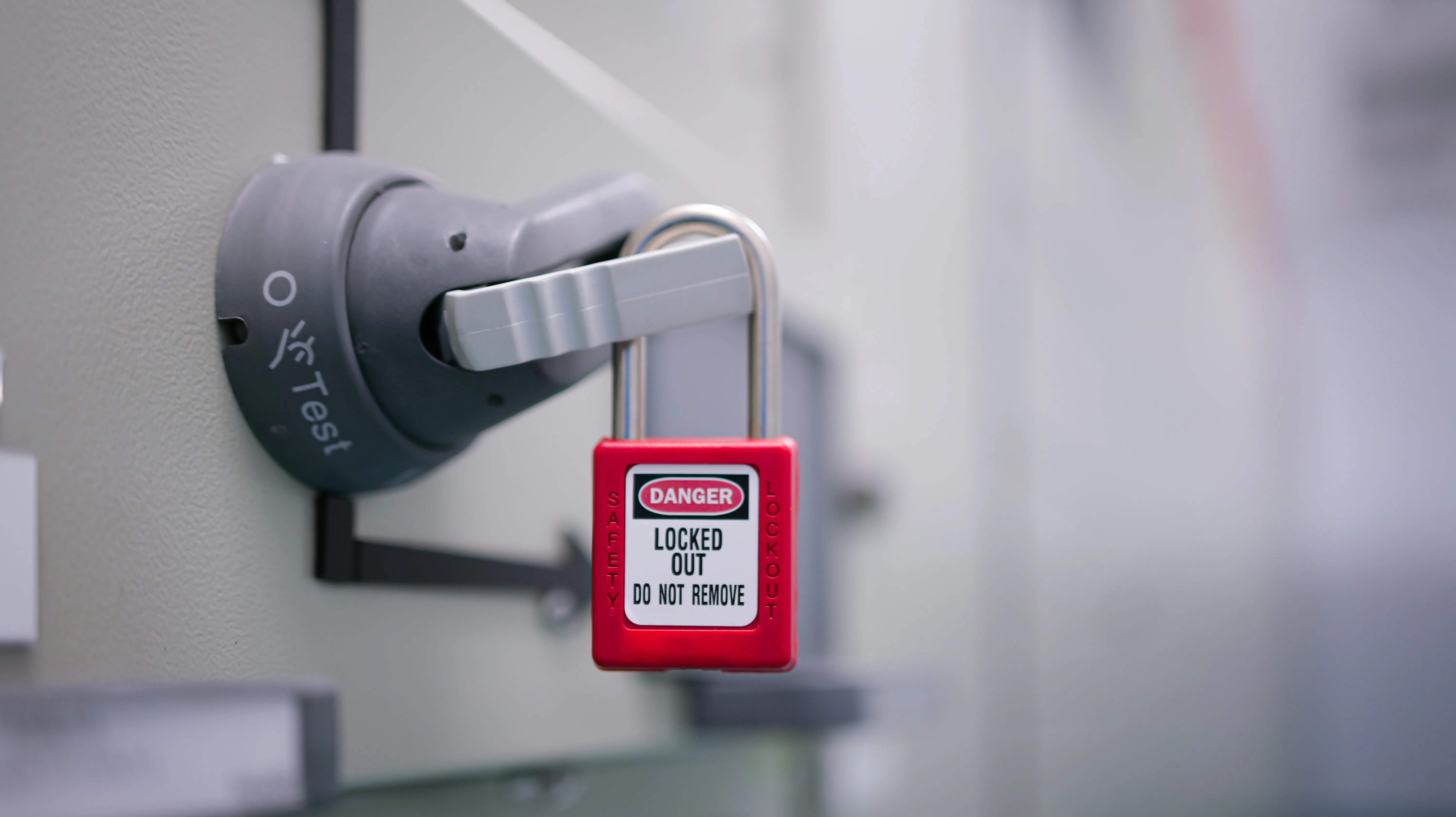
“Lockout” means applying a lock or locks:
- to the de-energized machinery so it cannot operate, or
- to isolate a source of energy.
For example, a lock can be used to prevent a worker from turning on a machine’s power switch while another worker is doing maintenance work on that machine.
Electrical energy is just one of several types of energy. Other types of potentially hazardous energy include kinetic, chemical, potential, and thermal energy as well as radiation. Failing to recognize and control these types of energies can also result in injuries and deaths.
Safe Work Practices
De-energization and lockout occur in crane operations for processes such as service or maintenance, inspections, leaving the cab, or refuelling equipment. Before any of these processes occur, site supervisors need to take steps to ensure and confirm continued de-energization and lockout. Refer to your equipment manufacturer’s manual or your company safety program for de-energization and lockout procedures.
- The personal lock is a sign to all workers that a hazardous energy source has been de-energized or isolated and that maintenance work is occurring. Any other worker who needs to work in this same area must attach a personal lock as well.
- A lockout tag is also used to alert workers about the hazardous energy source.
- Only a lock’s owner should remove their personal lock. If a lock needs to be removed, follow the worksite-specific procedures. This involves determining if the worker with the lock is still doing maintenance work on the machinery or is elsewhere in the workplace.
To re-energize or reactivate the machinery or equipment, follow the worksite-specific procedures.
Reference
Occupational Health and Safety Regulation Part 10 De-Energization and Lockout