Load Control
Overview
Many crane accidents are caused by improper control of a load. When operating a mobile crane, you must maintain control at all times and demonstrate the proper techniques for correcting a swinging load.
Load chart ratings apply only when the load is in direct vertical alignment with the boom tip at all times. Since load chart capacities do not allow for fast swings, you must adjust the swing rate so the load is always kept directly below the boom tip.
Note
When operating a mobile crane, you must maintain control at all times.
Catching a Load that is Swinging Sideways
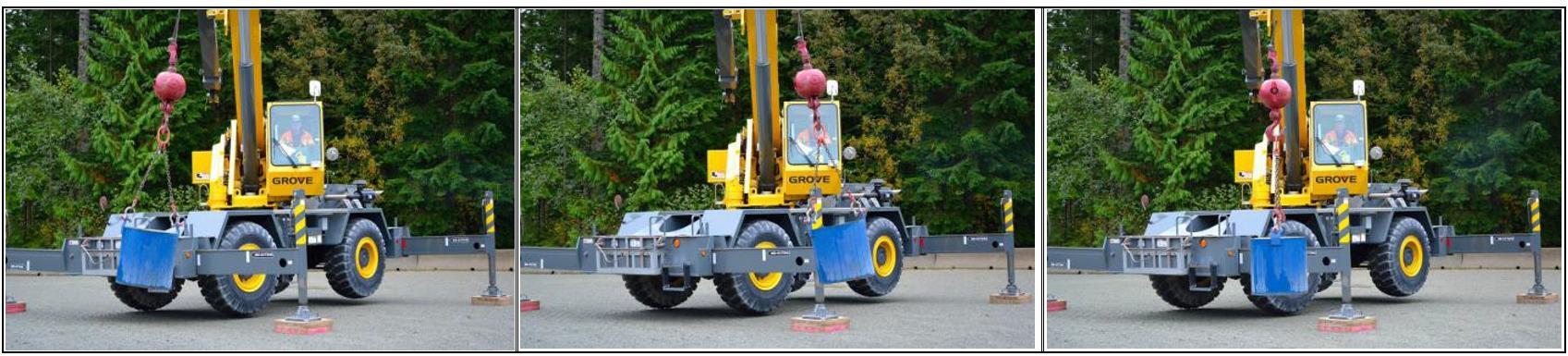
When catching a load, all crane movements during operation must be made slowly to prevent side loading of the boom.
- Make sure the boom/swing is stopped.
- Prepare to engage the swing lever.
- Just before the load is perpendicular to the boom tip, start swinging the boom in the direction the load is travelling.
- Repeat the procedures above if the load is still not under control. Do not swing the boom erratically back and forth to catch the load.
Catching a Load that is Swinging Forwards and Backwards
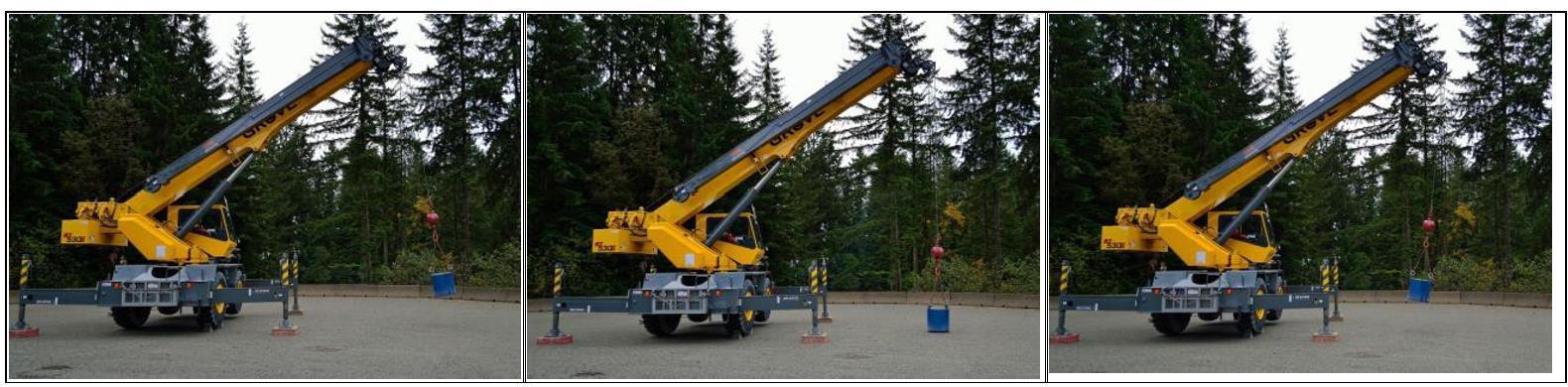
When catching a load by raising the boom, care must be taken to prevent the load from hitting the crane. You must also ensure that the swinging load is not at a radius beyond the crane's capacity.
- Prepare to engage the hoist lever to the UP position.
- Just before the load is perpendicular to the boom tip, engage the lever to the UP position.
- If the load starts swinging back in the opposite direction (away from the operator) or the load is swinging too far under the boom tip, stop and repeat the steps above.
Information in this document is considered accurate at the time of publication. Please contact BC Crane Safety – Publications Review with any questions or recommendations for content revision. Please refer to WorkSafeBC for current copies of the Workers Compensation Act and Occupational Health and Safety Regulation (OHSR).