Musculoskeletal Injuries (MSIs) Prevention in Cold Conditions
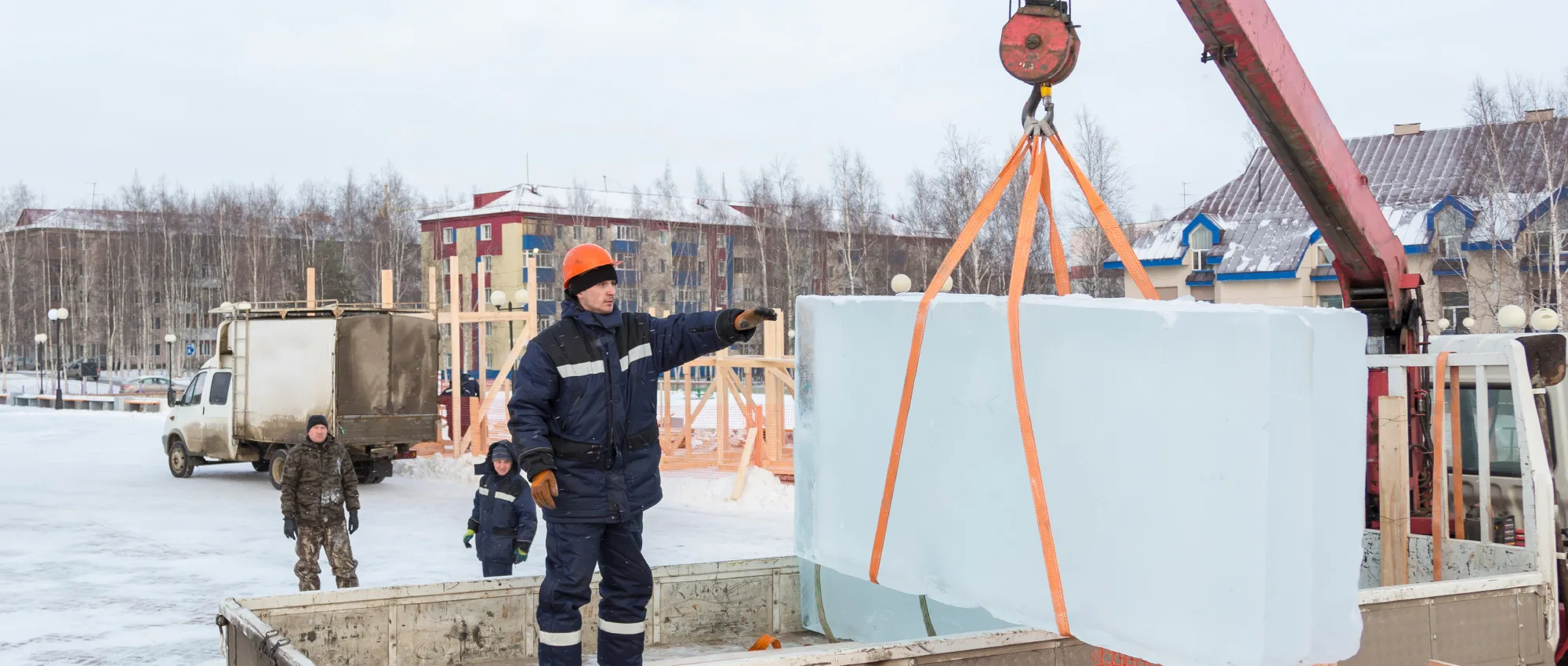
Exposure to cold can increase the risk of Musculoskeletal Injuries (MSIs) by causing muscles and joints to become stiff, reducing flexibility. This can increase the risk of strains and sprains. Cold temperatures can constrict blood vessels, reducing blood flow to muscles and extremities and causing numbness in the fingers. This impaired muscle function can affect grip strength and increase the risk of injuries because crane operators rely on a strong and precise grip to control equipment.
Cold weather often brings snow and ice, creating slippery surfaces around the crane. This increases the risk of slips, trips, and falls, which can result in various injuries including sprains and strains.
Read on to learn more about MSIs and how applying the principles of ergonomics can help prevent them.
Musculoskeletal Injuries (MSIs) and Ergonomics
An MSI is an injury or disorder of the muscles, tendons, ligaments, joints, nerves, blood vessels, or related soft tissue. These injuries may be caused by or aggravated by work. Unlike a slip or a collision that might cause noticeable discomfort right away, MSIs typically affect workers gradually over time. These injuries can result in time lost at work, short-term or chronic pain. An MSI can be debilitating and can affect a worker for the rest of their life.
Ergonomics involves the scientific study of the relationship between people, their working environments and the tasks they perform. Applying principles of ergonomics helps create healthier workplaces and helps reduce MSIs at workstations by eliminating or minimizing the factors that cause MSIs.
How Do MSIs Affect People Who Work with and Around Cranes?
Crane operators typically experience MSIs that affect the neck, shoulders or lower back. Currently, the top five types of MSIs affecting crane operators, riggers and other related trades are:
- Back injuries: Caused by lifting, twisting, bending, or reaching.
- Shoulder injuries: Caused by overhead work, repetitive motions, or awkward postures.
- Neck injuries: Caused by looking up, tilting, or turning the head.
- Hand and wrist injuries: Caused by gripping, pinching, vibrating, or the impact of using tools.
- Knee injuries: Caused by kneeling, squatting, or climbing.
Ergonomic factors that can contribute to MSIs on their own or exacerbate injury from performing physically demanding tasks include:
- The way the work area is laid out
- Characteristics of the objects being handled
- Maintained awkward and/or static postures
- Environmental conditions such as temperature, cramped spaces, lighting
- The way the work is organized
- Vibration
All of these contributing factors can be exacerbated by working in cold conditions.
How Can MSIs Be Prevented?
Assess the risks and be aware of them when at work.
Employers are required by Occupational Health and Safety Regulations to conduct MSI Risk Assessments and use them to prevent injury. WorkSafeBC has created some useful resources to guide the risk assessment process:
- WorkSafeBC: Guide to Musculoskeletal Injury (MSI) Risk Assessment
- WorkSafeBC: Musculoskeletal Injury (MSI) Risk Assessment Worksheet
- WorkSafeBC: MSI Prevention Guidance: Cold Temperature
A risk assessment can only be effective if it is communicated to everyone on site and if workers know how to recognize and minimize the risks of MSIs.
Reduce potential impacts on the body.
When moving objects by hand:
- Minimize the distance materials are moved.
- Store materials at or above hip height.
- Break them into smaller loads for easier transport.
- Get help when lifting heavy or bulky objects.
- Protect your back by using proper lifting techniques.
The WorkSafeBC: Back Talk: An Owner’s Manual for Backs booklet is an excellent resource. - Use dollies, hoists, forklifts, etc.
- Avoid swinging or throwing heavy loads.
When using tools:
- Reduce contact stress by using tools with rubberized handles that don’t dig into the hands.
Stretch.
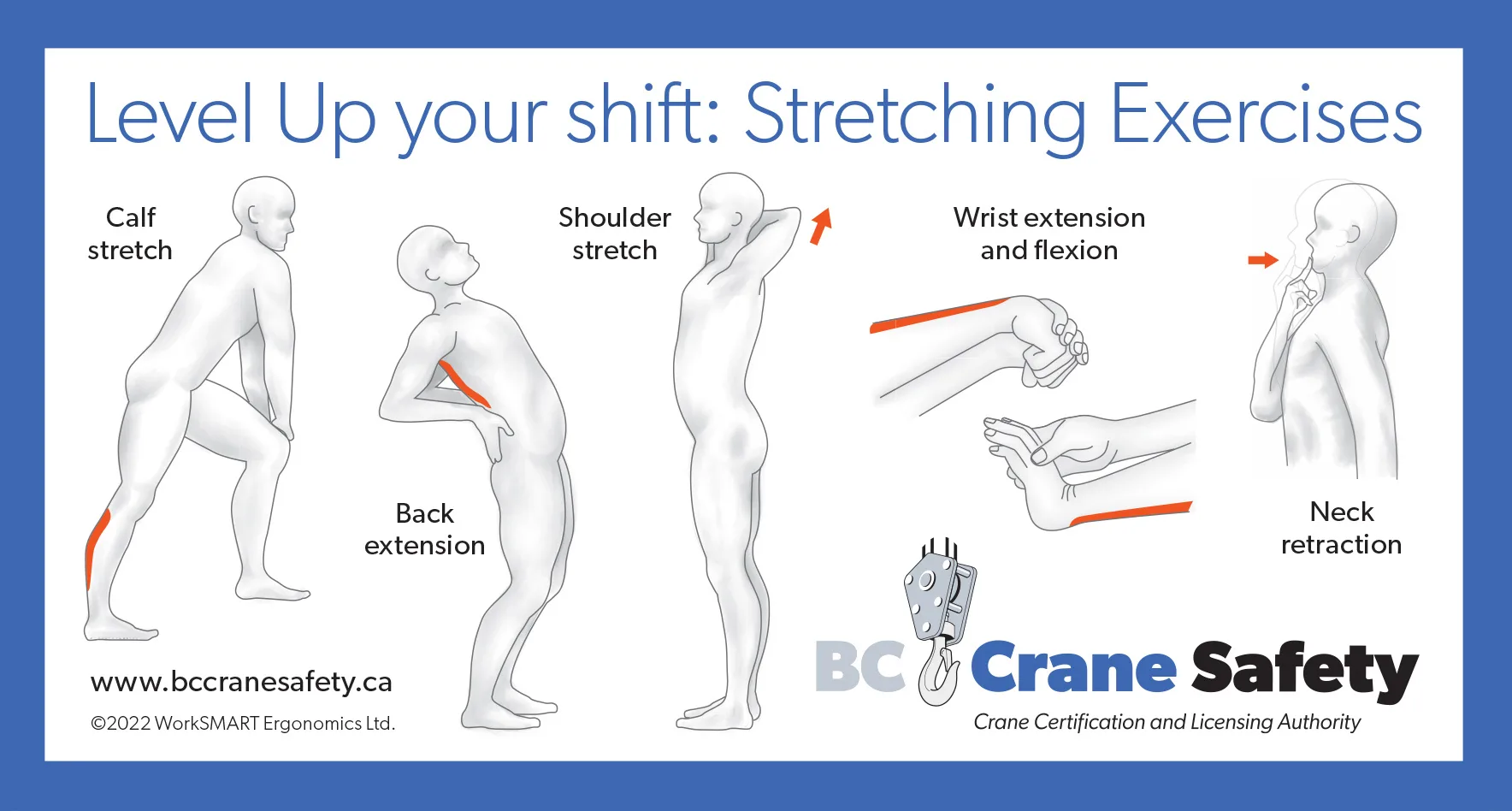
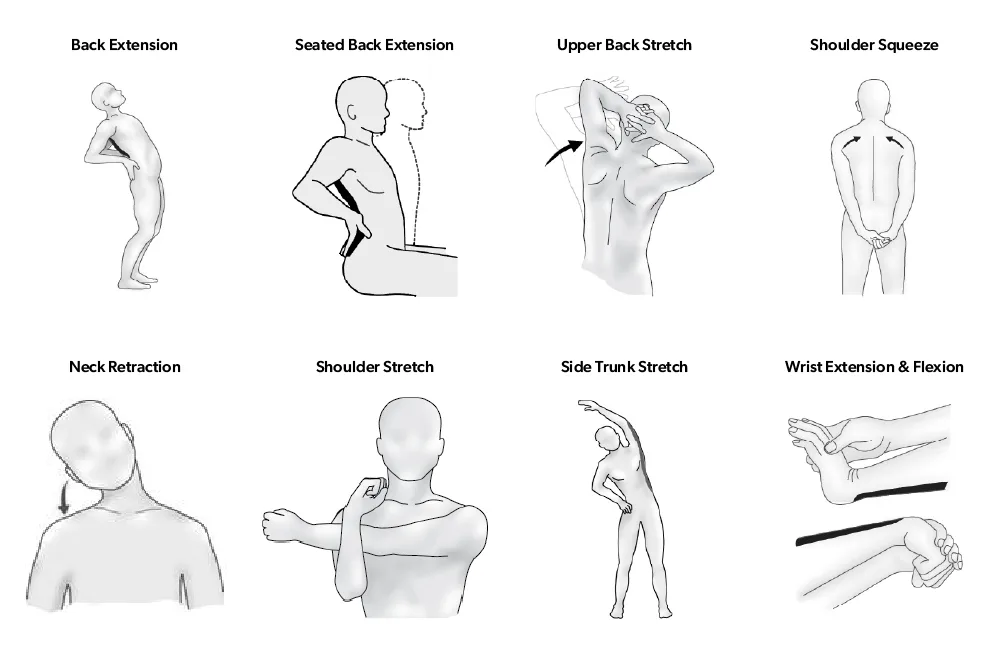
Regular exercise helps to keep your muscles strong and healthy, builds endurance, joint mobility and supports resilience. In addition to exercising, make sure to warm up before your shift. Take frequent breaks to stretch and move around, especially if you’ve been working in a stationary position. Focus on the shoulders, back, wrists, and neck.
Here are a few useful stretches:
Arrange the work area to minimize stress on the body.
Arranging your work area to minimize the stress on your body can go a long way to preventing MSIs. Small changes can support good posture, reduce the amount of time you have to hold awkward or static positions, and minimize having to reach for frequently used tools or controls.
Here are a few tips:
- Use extended handles on tools to reduce the need for crawling when doing floor-level tasks.
- Place the most frequently used items within a forearm’s reach and less frequently used items within a comfortable arm’s reach.
- Adjust the seat height in the crane cab.
- Frequently change positions between sitting and standing.
- If you can, keep the work area at a comfortable temperature.
Additional Resources
BC Crane Safety Toolbox Talks
WorkSafeBC
Occupational Health and Safety Regulation (OHSR) References
- OHSR Sections 4.46–4.53 Ergonomic (MSI) Requirements
- OHSR Sections 4.64–4.69 Illumination
- OHSR Sections 7.10–7.16 Vibration Exposure
The corresponding Occupational Health and Safety (OHS) Guidelines provide additional support:
- OHS Guidelines G4.46–G4.53 Ergonomic (MSI) Requirements
- OHS Guidelines G4.65–G4.69 Illumination
- OHS Guidelines G7.11-1–G7.16 Vibration Exposure
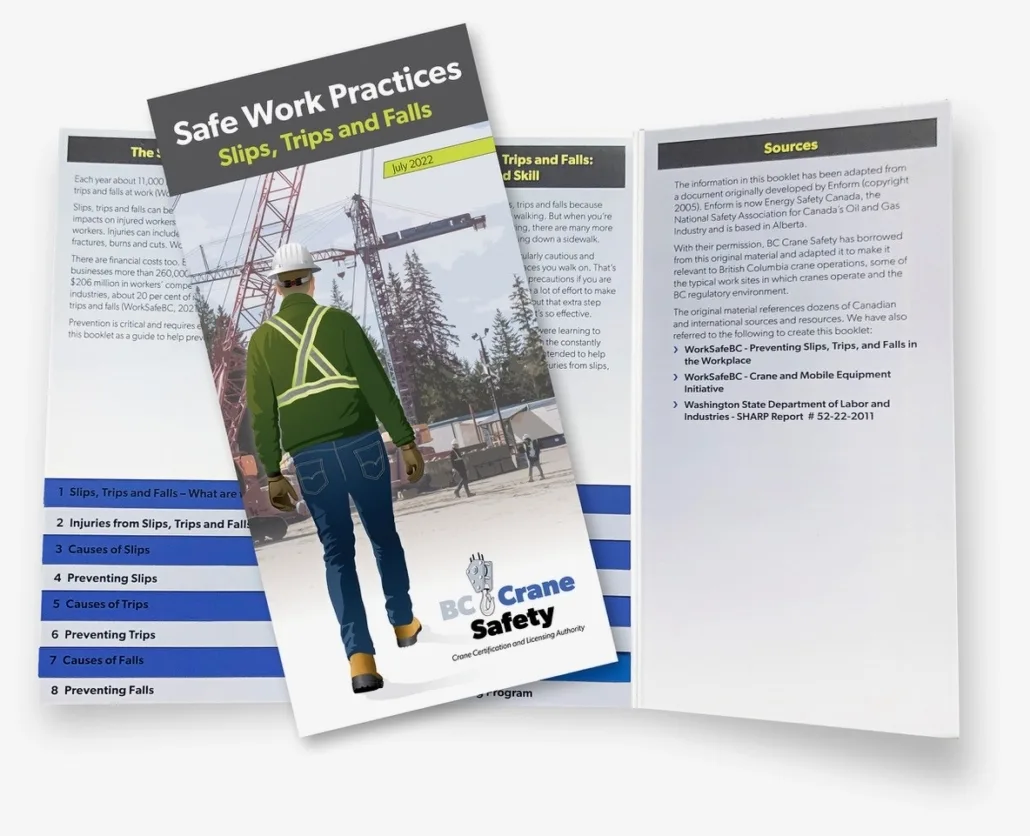
An instructional warm-up Level Up Your Shift: Stretching Exercises magnet, and the Slips, Trips, and Falls infoflip are now available from BC Crane Safety. Just contact us at [email protected] or call 604-336-4699 to get yours at no charge.